 SEO
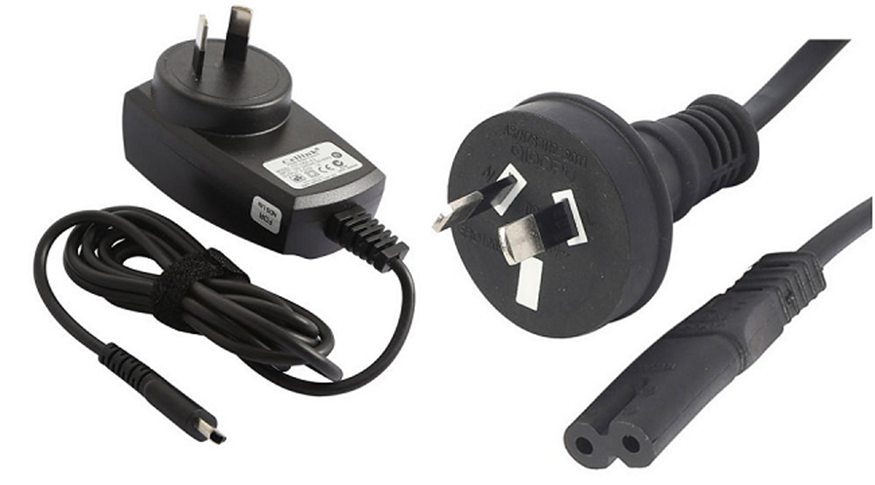
You’ve just unboxed a pre-owned PlayStation 4 or maybe you’re setting up your new Xbox Series X in a new entertainment centre, only to realize the power cord is missing or too short. It’s a moment of frustration that sends many gamers scrambling online for a replacement. But as you browse, you are bombarded with terms like “IEC C7,” “Figure-8,” and “Kettle Lead.” Suddenly, a simple cable purchase feels like a technical exam.
While power cables might look like boring black wires, they are built to specific international standards. Understanding these standards is the key to finding a safe, compatible replacement without wasting money on the wrong part.
In this guide, we will demystify the world of console power cables. We will break down the common types, explain how they differ by region and generation and help you confidently pick the right cord for your setup.
Common Power Cable Types
Unlike the chaotic days of retro gaming where every console had a unique power brick, modern consoles have largely standardized around a few specific connector types. These are governed by the International Electrotechnical Commission (IEC) standards.
Recognizing these shapes is the first step in identifying what your console needs.
IEC C7 vs C13 Explained
The vast majority of modern consoles use one of two standards:
1. The IEC C7 (“Figure-8”)
This is the most common power cable for modern home electronics.
- Appearance: The connector is flat with two circular holes side-by-side, resembling the number 8. It is unpolarized, meaning it can be plugged in either way up.
- Console Examples: PlayStation 4 (Slim/Pro), PlayStation 5, Xbox One S/X, Xbox Series S/X, Sega Saturn, Sega Dreamcast and the original PlayStation.
- Use Case: It is typically used for devices that do not require an earth (ground) connection and draw lower to medium power.
2. The IEC C13 (“Kettle Lead”)
This is a heavier-duty cable often found on high-power devices like desktop PCs and kitchen kettles (hence the nickname).
- Appearance: The connector is larger and roughly hexagonal (trapezoidal) with three rectangular holes. It is polarized and grounded.
- Console Examples: Original PlayStation 3 (“Fat”) original Xbox 360 (wall side of the brick) and some early models of the original Xbox One power brick.
- Use Case: Used for devices that draw significant power and require a safety ground connection.
3. The IEC C5 (“Mickey Mouse” or “Cloverleaf”)
While less common on consoles directly, this connector often plugs into the external power bricks of laptops and some console adapters.
- Appearance: Three circular holes arranged in a triangle, looking like a clover or Mickey Mouse’s silhouette.
- Console Examples: The wall-side connection for the external power brick of the Xbox 360.
Matching Cables to Consoles: A Comparison Guide
To make your search easier, here is a breakdown of which standard is generally used by popular systems.
| Connector Standard | Nickname | Shape Description | Common Console Compatibility |
| IEC C7 | Figure-8 | Two distinct circles (looks like an ‘8’) | PS1, PS2 (Internal PSU models), PS3 Slim/Super Slim, PS4, PS5, Xbox Series X/S, Xbox One S/X, Saturn, Dreamcast |
| IEC C13 | Kettle Lead | Three rectangular holes (Hexagon) | PS3 (Original Fat Model), Xbox 360 (Power Brick to Wall) |
| IEC C5 | Cloverleaf | Three round holes (Triangle) | Xbox 360 (Some Power Brick models), Laptop chargers |
| Polarized C7 | Squared Figure-8 | One square side, one round side | Some versions of the PS4 Pro, older Sony electronics |
Note: Always visually verify the port on your console before buying. Manufacturers sometimes change power ports mid-generation (e.g., the PS3 Fat used C13, but the PS3 Slim moved to C7).
Differences Between Regions
One of the biggest advantages of these standardized modern console power cord types is that the console-side connector is universal. An IEC C7 connector in Australia is exactly the same size and shape as an IEC C7 connector in the United States or Japan.
However, the wall-side plug is where regional differences come into play.
- Australia/NZ: Type I plug (two angled flat pins).
- USA/Canada: Type A/B plug (two flat parallel pins).
- UK: Type G plug (three large rectangular pins).
- Europe: Type C/F plug (two round pins).
The “Traveller’s Advantage”
If you import a console from Japan or the US that has an internal “universal voltage” power supply (like a PS5), you don’t need a clunky travel adapter. You can simply swap the entire power cable for a local Australian IEC C7 cable. The cable fits into the console perfectly and the plug fits your wall outlet safely.
Common Compatibility Mistakes
Even with standardized cables, there are a few pitfalls to avoid.
1. Confusing Polarized vs. Non-Polarized C7
While the standard Figure-8 (C7) is symmetrical, there is a variation called the “Polarized C7” (C7P). This connector has one square side and one round side.
- The Problem: A standard Figure-8 cable will not fit into a polarized port. However, a polarized cable will often fit loosely into a standard port, which is unsafe.
- The Fix: Check if the port on your console is perfectly round on both sides or if one side is squared off.
2. Assuming All “Figure-8” Cables Are Equal
Not all cables are built to the same quality. A thin, cheap cable might be rated for only a few amps. If you use this on a power-hungry console like the PS5, the wire can overheat. Always ensure the cable is rated for the amperage your device requires (usually printed on the cable jacket).
3. Ignoring Voltage on Imported Consoles
Changing the cable solves the physical connection problem, but it does not change the voltage.
- Modern Consoles: Most (PS4, PS5, Xbox Series X) are “dual voltage” (100V-240V), so swapping the cable works fine.
- Retro/Older Consoles: Many older systems (and even the original Nintendo Wii U) are fixed voltage. Plugging a US (110V) console into an Australian (240V) wall using a simple cable swap will instantly destroy the console. Always check the label on the console first!
Why Quality Matters
When you are powering a machine worth hundreds of dollars, the quality of the cable matters. Cheap, uncertified cables often lack proper insulation, strain relief and copper thickness. This can lead to intermittent power loss (the console shutting off if the cable wiggles) or even fire hazards.
Certified cables meet safety standards like the RCM (Regulatory Compliance Mark) in Australia, ensuring they can handle the electrical load safely and reliably.
Last Words
Understanding game console power supplies and cables doesn’t require an engineering degree. It simply requires knowing the difference between a “Figure-8” and a “Kettle Lead.” By matching the shape of the connector and ensuring the cable is high-quality, you can easily replace lost cords or upgrade to longer ones for better cable management.
If you are looking for safe, tested and reliable power solutions, it pays to buy from specialists who understand gaming hardware. Whether you need a Figure-8 cable for your PS5 or a specific lead for a retro build, you can find the right fit at Campad Electronics.
Browse their extensive range of compatible cables here: Campad Electronics Game Console Chargers.

 John